
ohio state jersey
Sport Yacht vs. Private Yacht Charter in Barcelona: How to Choose the Right Boat for Your 2026 Mediterranean Trip

Jan
Sport Yacht vs. Private Yacht Charter in Barcelona: How to Choose the Right Boat for Your 2026 Mediterranean Trip
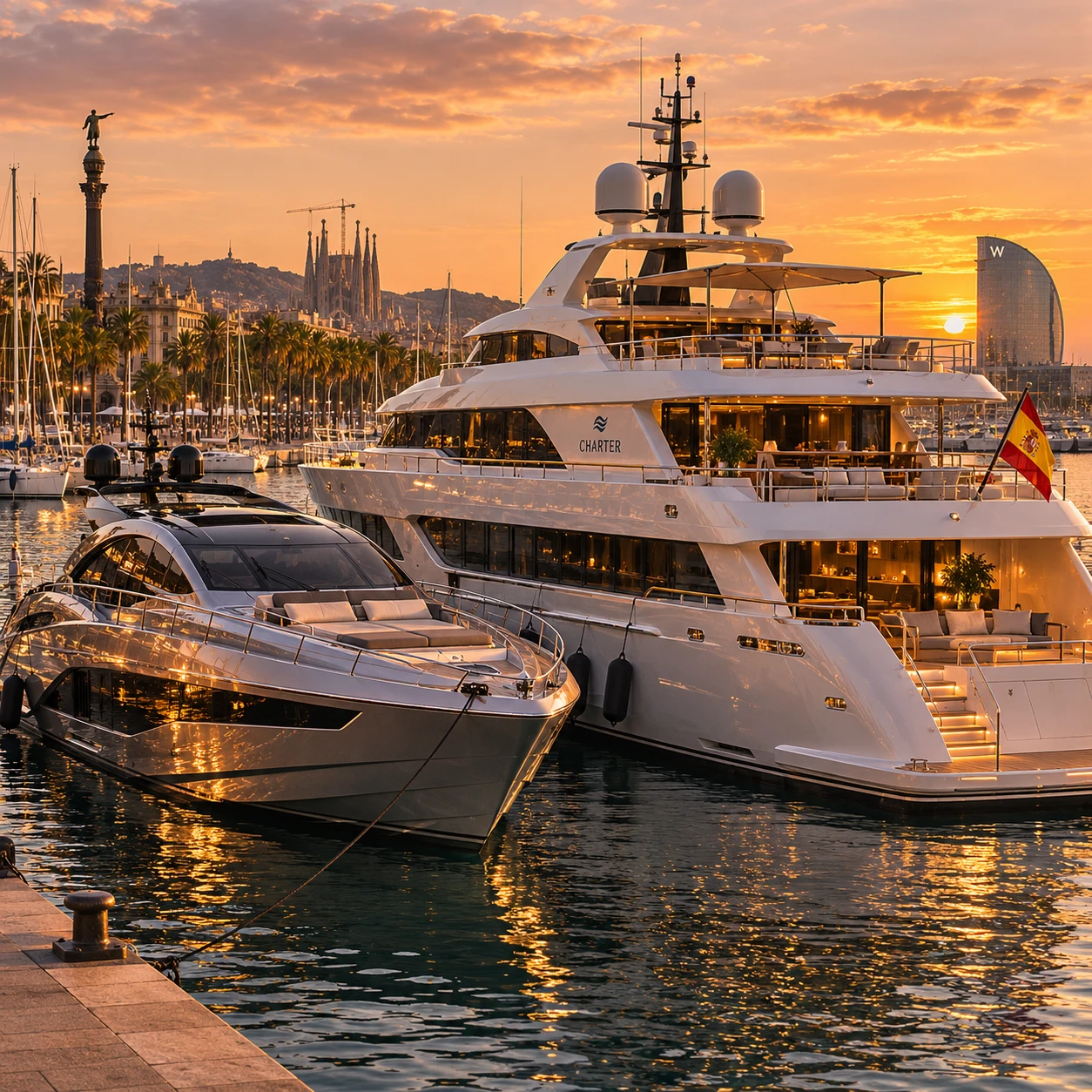
Barcelona is one of those rare cities where the sea isn't a backdrop. It's a second city. Step off the passeig, walk five minutes to Port Vell or Port Olímpic, and the geography just... changes. Garraf cliffs a short run south. Costa Brava starting to the north. Mallorca roughly a hundred miles east, straight across open water.
That closeness is a gift. It's also the exact reason so many people end up on the wrong boat.
I've watched it happen for years now. Someone pictures a white hull, a sun pad, a glass of cava, and assumes every charter delivers the same day. It doesn't. A sport yacht and a crewed private charter are built on completely different ideas of what a good day at sea even means. One is about sensation and reach. The other is about space and slowness.
This isn't a sales pitch. It's a decision framework. Work through it in the right order and you'll land on the right boat almost every time.
What Actually Separates a Sport Yacht from a Private Yacht Charter
A sport yacht is a performance hull first. Picture 40 to 60 feet, a deep-V or planing bottom, twin high-output engines, an open cockpit with sun pads and a wet bar, and a cruising speed that turns a two-hour transfer into forty minutes. The design priority is motion. Get somewhere quickly, then do it again somewhere else.
A private yacht charter is a different category altogether, because it's defined by the arrangement, not the hull. Crewed or bareboat. Motor or sail. Sized and staffed around your group and your itinerary. The boat serves the plan rather than outrunning it.
There's real overlap here, so let's just say it plainly: plenty of charter vessels are sport yachts. The choice isn't between two unrelated products. It's between two styles of day.
The Performance Profile: Speed, Range, and Sea State
Planing hulls ride on top of the water instead of through it. That's why they're fast. It's also why they're thirsty. At a comfortable cruise you burn a fraction of what you'd burn at wide-open throttle, and that gap shows up on the fuel line of your invoice.
Barcelona builds an afternoon chop, too. Especially in summer, when the thermal breeze kicks in around midday. A sport yacht handles it fine, but the ride gets livelier, and guests prone to seasickness feel it more at speed.
What speed actually buys you is range. Run north toward the Costa Brava, or spend a long day down past Garraf toward the Ebro delta — a fast hull is the difference between one anchorage and three.
The Comfort Profile: Deck Space, Shade, and Service
This is where a larger charter yacht pulls away. Shade that actually covers a group. Seating for eight that isn't really a bench built for six. A swim platform you walk down rather than climb over. A tender that gets you ashore dry. A galley that can produce a real lunch for twelve, and a crew ratio where someone's always refilling a glass while someone else handles the lines.
For mixed groups, older guests, or anyone planning a long lunch at anchor, those details matter more than knots. A boat that does 35 knots isn't automatically more enjoyable at 2 p.m. with the sun straight overhead.
Matching the Boat to the Day You're Actually Planning
Here's how the usual Barcelona days sort out.
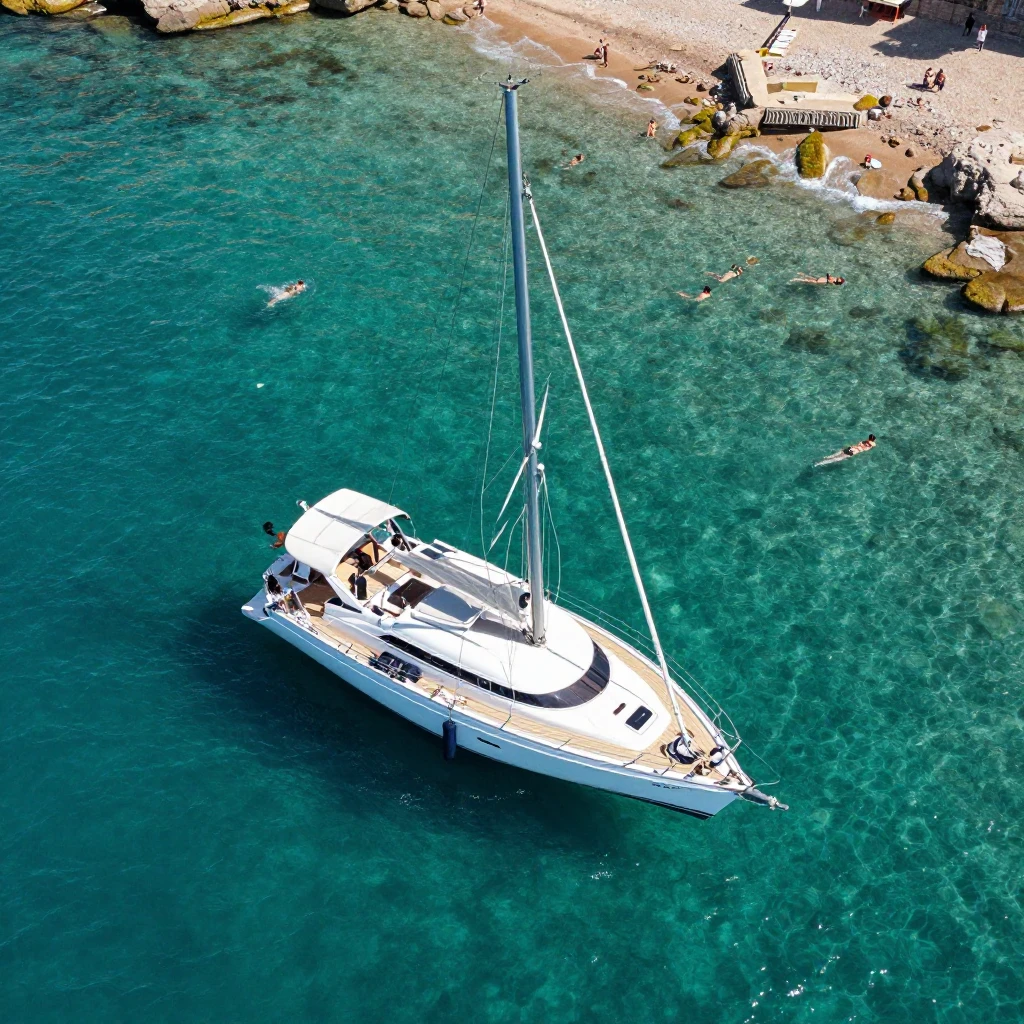
- Half-day swim-and-anchor run to the Garraf coast. Sport yacht. Quick run south, two or three coves, back before dinner.
- Full day to Sitges with a lunch reservation ashore. Either, leaning sport yacht — the speed protects your table booking.
- Sunset cruise past the skyline and Port Vell. Either. Smaller groups lean sport yacht; larger groups want deck space and shade.
- Multi-day push to Mallorca or Menorca. Private charter. Overnight comfort, cabins, air conditioning, and crew become non-negotiable.
- Celebration or corporate event where the boat is the venue. Private charter. The boat isn't transport, it's the room.
Run your day through five filters: group size, total hours aboard, speed versus space, the age and mobility of your guests, and whether food gets catered on board or eaten ashore. Those five answers usually kill one option on the spot.
When a Sport Yacht Is the Right Call
Fast transfers maximize the time you actually spend in the water. Not a small thing. If you'd rather snorkel three coves than sit at a table, a sport yacht wins outright. The open layout suits younger groups, it photographs beautifully, and cost per hour for a small party runs lower than a crewed vessel.
Agility counts too. When the wind shifts or a cove fills up, a fast, nimble boat lets the captain change the plan without wrecking the day. My clearest example: four to eight guests, half a day, a captain who knows the coves south of the city by heart, and a group whose only real priority is being in the water. That's a sport yacht day. Nothing else does it better.
When a Private Yacht Charter Wins
The mirror image is just as sharp. Larger groups, multi-generational families, clients you're hosting, or anything needing genuine crew service — a chef, air conditioning below deck, shade at anchor — and the private charter becomes the obvious answer. You're paying for capacity and attention, and you'll use both.
The trade-offs are honest ones. Passage times are slower, so your radius shrinks. Deeper draft closes off a few shallow anchorages. The day rate is higher. Some of that gets offset by what's bundled in. Not all of it, though.
If you want to see how the two fleets genuinely differ in size, layout, and crew configuration before committing to anything, browsing sport yacht options near Barcelona next to the larger charter vessels is the fastest way to do it.
Cost, Crew, and What's Usually Included in 2026
Anyone quoting you a single number for 'a yacht day in Barcelona' is skipping the parts that matter. The real structure: base charter fee, fuel, captain and crew gratuity, catering and drinks, port and anchorage fees, and VAT.
Fuel is the wild card. On a sport yacht running at speed it can be the single largest variable line on the invoice, which is exactly how a sport yacht looks cheaper on the quote sheet and then surprises you later.
A crewed charter's higher headline rate often bundles more: crew, sometimes fuel within a set itinerary, often catering. So compare the all-in figure, not the sticker. And watch the calendar. July and August pricing climbs hard. June, September, and October give you much the same Mediterranean weather at meaningfully better rates.
Deposit, Cancellation, and Weather Policies
Read the contract before you pay. What percentage is the deposit, and when does the balance fall due? What are the exact weather cancellation terms, and who decides — the captain, or you? A good operator cancels for unsafe conditions and offers a reschedule or refund. A poor one leaves it vague. Get it in writing.
How to Book the Right Boat Without Regret
Define the brief first: guests, hours, priorities. Then verify licensing and insurance for both the vessel and the captain. Then confirm, line by line, exactly what the quoted price includes. Ask for the specific vessel by name rather than a category, because 'a 50-foot sport yacht' can mean wildly different boats. Check recent photos and reviews, not the brochure shots from 2019. Confirm the embarkation port, since Port Vell and Port Olímpic are not the same walk from your hotel.
Comparing private yacht rental Barcelona listings against sport-yacht options side by side keeps the comparison honest and stops you paying for capacity or speed you'll never use.
Questions to Ask Before You Pay a Deposit
- What's the maximum guest count, and is that a legal limit or a comfort limit?
- Is the crew included, and how many are on board?
- Is fuel included, or metered — and at what speed?
- What's the food and drink policy? Can we bring our own?
- How flexible are swim stops and route changes on the day?
- What's the cancellation window, and what happens in bad weather?
Frequently Asked Questions
Do I need a licence?
Not for a crewed charter — the captain holds the commercial licence. Bareboat requires a valid certificate and, in Spain, usually a sailing resume the operator will want to see.
Can we bring our own alcohol?
Often yes, sometimes with a corkage fee. Ask before you buy anything, and confirm whether the crew serves it.
What happens in bad weather?
A reputable operator cancels or reroutes, and the contract should spell out whether you get a refund, a credit, or a reschedule. Read that clause.
Is a sport yacht safe for children?
Yes, with the right captain and life jackets sized for them. Open decks need more supervision at speed, so a slower, wider boat is often the calmer choice with very young kids.
How far can we realistically go in a day?
On a fast sport yacht, the Costa Brava or a long run south past Garraf is comfortable. On a crewed motor yacht, plan fewer stops but more time at each.
What's the difference between bareboat and crewed?
Bareboat means you operate the boat yourself. Crewed means a captain — and often a host or chef — runs everything while you enjoy the day.
Conclusion
Choose by the day you actually want, not the boat that photographs best. Settle group size and priorities first, then match the vessel to those answers. And if you're planning for 2026, start comparing fleets now — the good June and September dates fill long before the season ever arrives.